

What a difference ten years makes
My journey from The Economist to full-time filmmaking

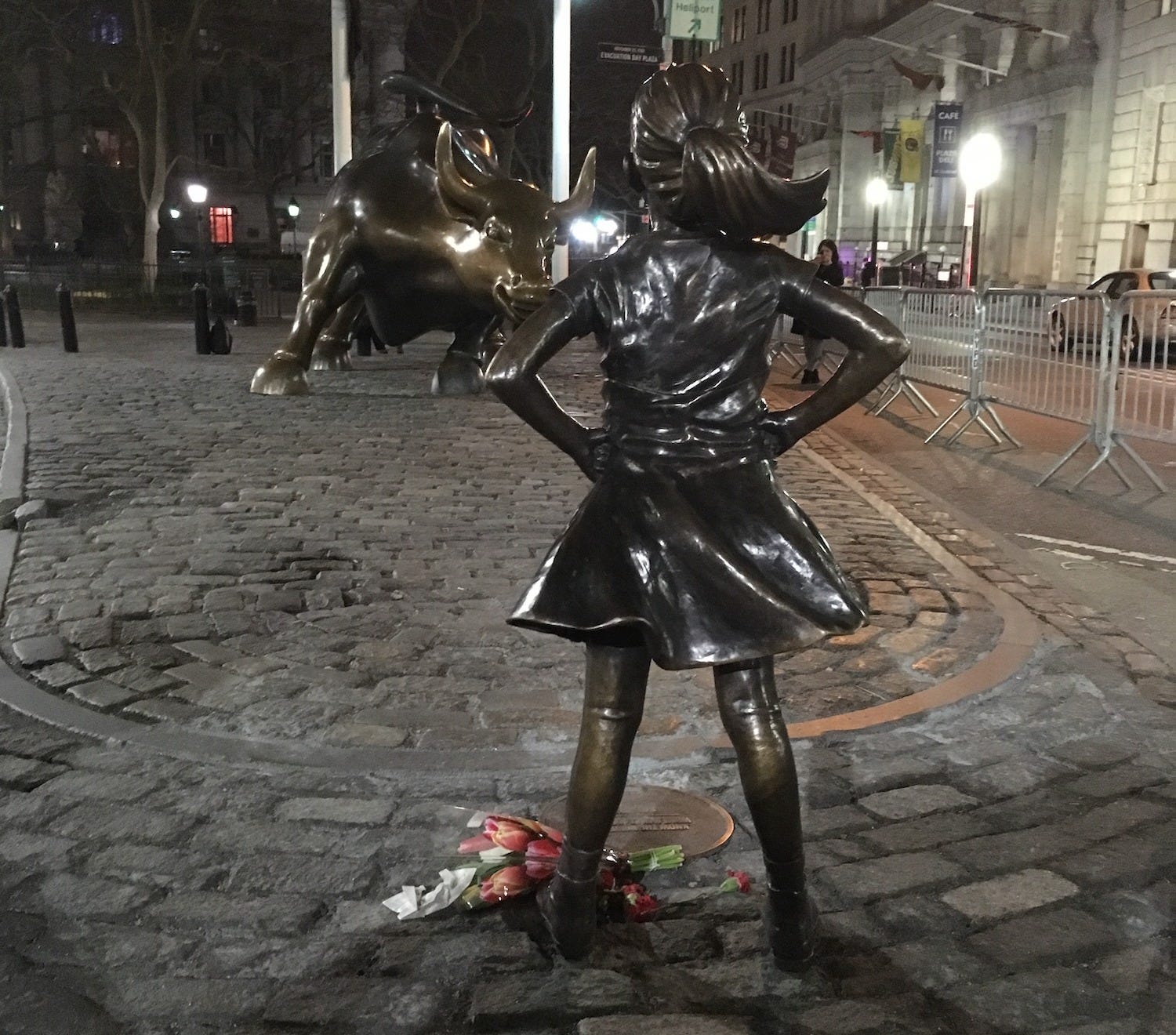
My feeds are full of stories and photos of people from 2016. This trend pops up every now and then, but this was the first time it was hard not to see the stark difference between the world in 2016 and the world now.
On a personal level, my life is completely different. In 2016, I still worked for The Economist on an H-1 B visa, lived in Brooklyn (before we were renovicted in 2017), became an auntie for the first time, directed my second horror short, got engaged to my now-husband, and dreamed of being a full-time filmmaker.
Now, I’m married, split my time between Queens, Los Angeles, and Toronto, am now a mid-level TV writer, worked on two more produced features (one is coming out this year), am the aunt of the most AMAZING 10-year-old (as of this Friday), have become a US citizen and can finally say I’m a full-time filmmaker!
This journey has a lot of twists and turns, which I’ll cover in the weeks to come. In the meantime, I’ve captured some of what my week as a filmmaker looks like below — it’s VERY different from my day-to-day in 2016!
A Tiny Story of a Statue
In 2013, my cousin and her husband invited me to join them on a trip to South America. Our two-and-a-half-week adventure spanned Brazil (Rio, São Paulo, & Costa Verde), Chile (Rapa Nui (via Santiago), and Peru (Cusco, Machu Picchu, and Lima).
As we were travelling in April, close to Easter, we had to plan our trip around when we could visit Machu Picchu, as travel was limited due to the holiday. If we wanted to go to Rapa Nui (also known as Easter Island), we’d only be able to go for 24 hours. Not wanting to miss this unique opportunity and not knowing if (or when) we’d be able to travel to South America again, we went for it.
To get to Rapa Nui, there was only one flight a day from Santiago, and it left early in the morning. We decided to stay in a hotel near the airport to reduce our travel time. (Side story: I posted on Facebook that I was in Santiago, and a friend of mine DM-ed me – she, too, was not only in Santiago, but was in the same airport as me! I hadn’t seen her in a couple of years (we worked together at PayPal), so we caught up over a drink in the bar. Serendipity!)
I hadn’t planned this trip, but I loved the idea of seeing the Moai in real life. These monolithic stone statues were created by the indigenous Polynesian people of Rapa Nui between the 13th and 16th centuries. Almost all Moai have overly large heads, which are typically three-eighths of the size of the whole statue. I’d seen them portrayed in Night at the Museum*, but I didn’t know more than that.
According to Wikipedia, “Archaeologists believe that the statues were a representation of the ancient Polynesians’ ancestors. The moai statues face away from the ocean and towards the villages as if to watch over the people. The exception is the seven Ahu Akivi, which face out to sea to help travelers find the island.”
The flight was five-and-a-half hours over water, which really made you realize how isolated you were out there. After we landed and settled in, we drove our rental car around the island – and it blew my mind. There were not one or two, but hundreds of Moai that dotted the landscape. In fact, there are approximately 900 Moai on the island! I still remember hiking through the Moai quarry at Rano Raraku, where they carved almost all of the Moai. I was in awe as I made my way amongst the 400 finished and half-finished statues still in the quarry. The scale and craftsmanship were absolutely incredible.
Later, we sat on the beach, cracked open a fresh coconut, and watched storm clouds in the far distance. Whole weather systems would just pass by the island as they traversed the vast ocean. With my feet buried in the warm sand, I ate my first-ever empanada (fresh swordfish), and no empanada has ever tasted as good.
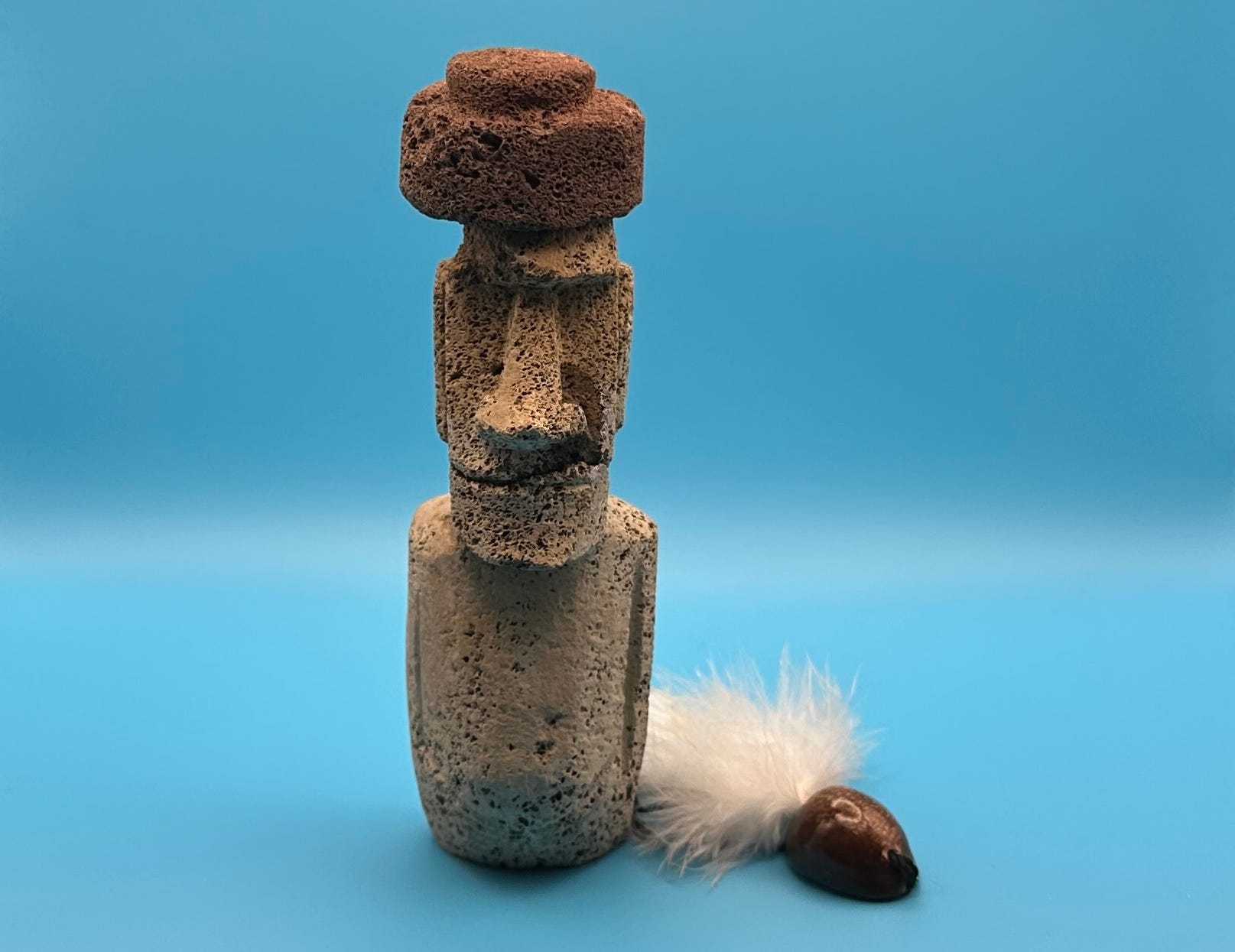
I bought this Moai made of volcanic rock from a local vendor on the beach. A little token of my 24 hours in a place that was beyond my expectations.
When we left the next morning, the hosts of the rental we stayed in gifted each of us with a cowrie shell necklace. These are sometimes given to travelers leaving the island to encourage their safe return. So instead of a goodbye, it’s a symbol to say “I hope to see you again.” It hangs in my room, a reminder of the exceeded expectations I found on a remote island surrounded by a vast ocean. A place that sits as a favorite at the top of the list of all the places I’ve ever visited.
PROMPT: What moment, person, or place surprised you in the best way? What were your expectations going in, and how did those change? Why did you expect what you expected, and how did the exceeding of your expectations make you feel? Use this prompt to get the writing flowing when you need it!
*Night at the Museum takes place in the British Museum. There are calls for them to return the Moai statue, Hoa Hakananai’a, that was stolen from Rapa Nui in 1868. As this statue is seen as a living ancestor, it’s vital that it be returned. Read more here: https://www.bbc.com/news/world-latin-america-68332824
What I’m Working on this Week.
The Novel
Last week, I completed the 10k-word challenge. Being in a group writing sprint a couple of times a day really helped keep me on track, and everyone was so lovely. They never allowed us to say the word “only” and cheered just as much for the people who wrote 100 words as the people who wrote 1000 in each session. What a lovely way to write! It was also great advertising for the company’s yearly writer services, especially since they were SO kind. If I needed their coaching, I’d join! This week, I’ll be writing 1000 words every morning. It’ll be a nice way to start my day!
Horror Feature
I only progressed another 10 pages this week, which wasn’t as much as I'd hoped, but I’m slowly chipping away. A few unexpected things popped up, but that’s just the nature of this business! I plan to really focus on this project this week, so I can send it to some friendly readers for notes next week before I send it to my manager.
The Other Stuff
The “other stuff” will always disrupt the writing, but it can be important in building and growing your career. You just have to make sure you give yourself time for both! My week had a few more meetings than I expected – my favorite was with a producer who wanted to discuss one of my horror features I plan to direct. They thought that, by clarifying everything that was murky in the script, I’d taken out some of the dread/horror. My next plan of action is to go back through the whole script and see where I can crank the horror up without losing the heart. It’s a very personal story told through a horror lens, so it’s important for me to make sure both sides of the story work. I’m going to mull on this as I finish my other feature rewrite.
An interesting side quest this week was watching an entire season of a TV show on Thursday. Some shows are staffing right now, and for one submission, there was an option to send a cover letter. That was a first for me, but I jumped at the chance because it’s another touchpoint with someone who can move me further along in the staffing process. I like to make sure I’ve watched as much of a company’s work as I can before a meeting, but sometimes you don’t have enough time to watch or rewatch a series. When you’re short of time, usually you can watch the first and second episode, something in the middle, and the last one or two episodes of the season. I also read wiki overviews of the other episodes, so I’m very clear on what is happening.
In this case, I was asked to include my thoughts on the show and any personal insights/connections to the subject matter. For this, I really wanted to watch ALL of the episodes. You just don’t know what small moment you will catch that makes the difference in how connected you feel to the project. When I watch, I stay off my phone/ laptop and handwrite notes on a notepad. I write down:
how the episodes are constructed,
key storylines,
moments in the show that I experienced in my life,
themes that I relate to,
key character traits of the leads,
the ghosts each character carries (trauma, trauma, trauma),
and their internal statement (which represents their worldview).
I also write down any dialogue that resonates with me. I’ll pause the show to write down my thoughts, which will make the process longer than a typical binge-watching session. Then, after watching 9 hours of TV, I had to write the letter. It was exhausting, but I’m glad I did it.
This week, other than working on my feature and novel, I have a meeting with my audio agent, need to story edit and write/ record the intro to the next episode of Braaains, and get to meet with a new mentor to talk about a horror series I wrote a couple of years ago.
A lot of balls in the air – but that’s pretty typical when you’re a freelancer!
How do you balance all of the different parts of your life? (Honestly, I’d love to know alllllll your tips, as there's always more to learn!)
Things I’m Loving.
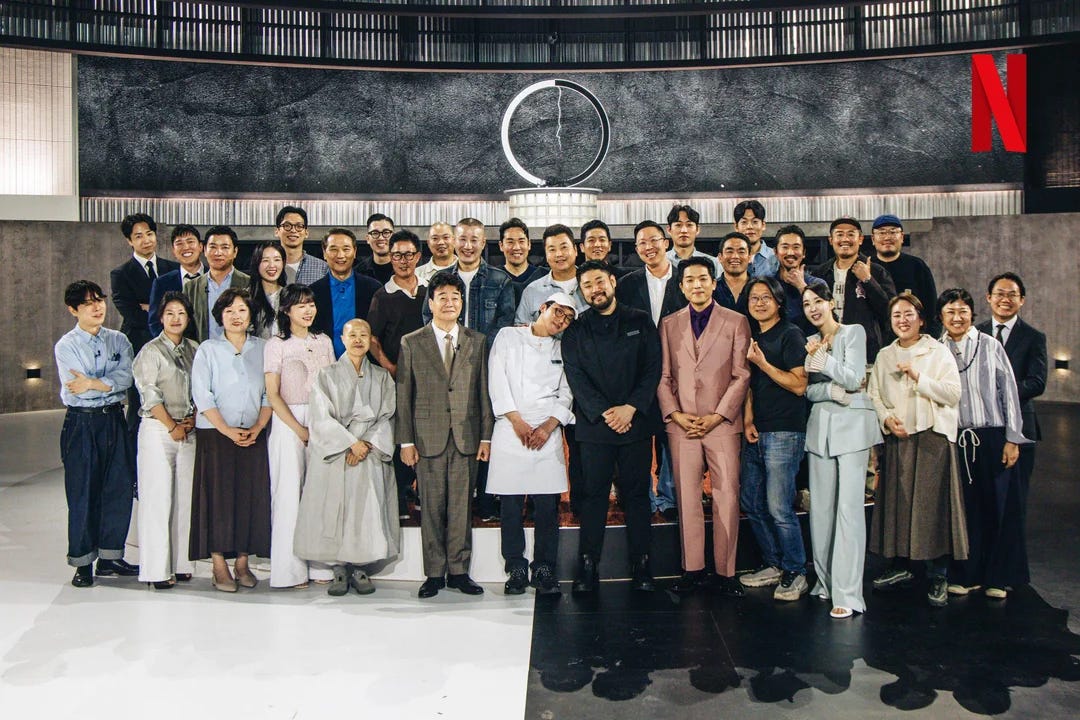
I know I talked about this show on my first post, but the finale of Culinary Class Wars happened last week, and it really ended in an unexpected way. I’m not even exaggerating when I say that I cried for most of the second half of the finale.
*SPOILER ALERT*
One of the finalists, Chef Choi Kang-rok, competed in season one but only reached the halfway point. In season two, as a finalist, he had to cook a meal that aligned with the theme: “One-of-a-Kind-Dish for You.” It was supposed to be a dish that you’d love, one that you’d only make for yourself. I’ve never seen this type of challenge; usually, the food you make is all about the people you’re serving.
For the first time, the chefs in competition had to sit with the judges and eat with them. Chef Choi made sesame tofu from scratch and placed it in an udon broth with all his favorite ingredients: pine mushrooms, snap peas, and uni roe wrapped in pumpkin leaves, to create a soup just for him.
The judges asked him, “Why did you want to serve yourself this dish?”
Chef Choi took a moment to respond. “I know I’m known for my braising. I was The Braiser, The Serial Braiser, Jorimping. I ended up with those nicknames, but I wasn’t good at braising. I just pretended to be good.”
Cue the start of my tears…
He continues, “Of course, I studied up on it. While I eventually got good, I was still pretending to be something I wasn’t. Braising is something I do for others, so I didn’t want to do it for myself. I decided to make something that brought me comfort. Most days, I just push myself. I keep trying to get better. I don’t think I’ve cooked for myself for more than 90 seconds. Just instant noodles. That’s all that I’ve made for myself. So when I sat down and asked myself what I wanted to eat, this is what I wanted.”
Judge Anh Sung-Jae then asked: “Do you have anything you’d like to say to yourself?”
As he stared into his soup, Chef Choi said, “You’ve done good, Jorimping. You can go ahead and take a break just for today.” Then, as the judges ate, he continued: “I don’t consider myself to be a standout chef. I just do what most chefs do. I work in the kitchen with the other chefs, doing what needs to be done without any fanfare. And somehow, through sheer dumb luck, I ended up as Jorimping.”
Judge Anh Sung-Jae responded in such a thoughtful way. “I think a lot of chefs can relate to the idea of feeling like you need to put on a mask of sorts, a feeling like you need to pretend to be something you’re not. I mean, I relate to that. So I think something as honest and vulnerable as this is just excellent.” And I knew exactly what he meant about wearing a mask. It’s something I’ve done a lot in my life – and I’m sure a lot of you reading have felt that way, too.
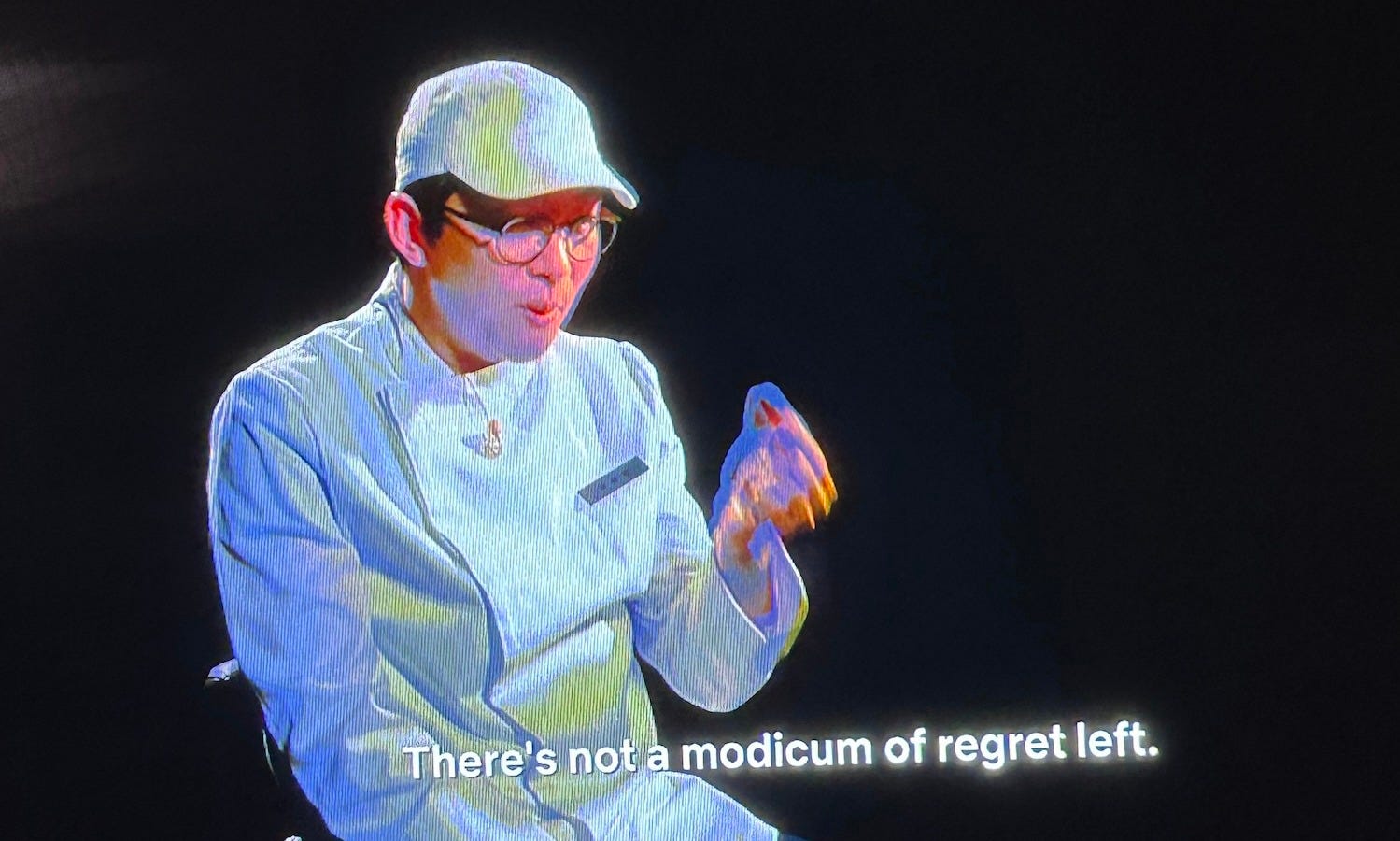
When Chef Choi won, he reiterated how he felt about himself as a chef: “I don’t think I’m special. I’m not an extraordinary chef by any means. I just happen to be a chef, that’s all. There are thousands of people just like me who work hard every single day to make food for others without any public recognition. There are countless chefs from different backgrounds. Some are culinary masters, and others are just starting their careers, but all of us work incredibly hard. Each of us has a gift for making something, and some of us decide to make a living with it. If I had it my way, I wouldn’t talk about myself. I just want to talk about those of us who love to cook.”
And that’s how the season ended – with the stories of the other chefs in the competition being interwoven with Chef Choi’s story as they talked about why they cook and how they came to cooking.
It really made me reflect on my life and my writing career. So often, you feel alone as you create worlds you’re trying to make to fit other people’s tastes as well as your own. You think, who would like this? What does the market want? What will sell?
This reminded me that we’re all in this together, some seasoned professionals, others just starting their careers, but we’re all just trying to make our own art, making a living with this gift that we have.
Maybe, as I reflect on the past 10 years, I can take Chef Choi’s words to heart: “You’ve done good, Heather. You can go ahead and take a break just for today.”
Your description of Rapa Nui gave me chills! The way you captured that feeling of standing among 400 Moai in the quarry is absolutley stunning. I actualy teared up reading about the cowrie shell necklace tradition, how touching that they gave you a symbol of return rather than goodbye. That fresh empanada on the beach sounds unforgettable!
I love how you wrapped this up. Beautiful.